
Emergency Garage Door Repair
Fast help for doors stuck open in the cold, jammed shut, or hanging out of square.
View serviceA door frozen to the concrete is restrained at the bottom while the opener pulls from the top. That is the single worst load you can put through a garage door, and every extra command makes it worse.
Stop using the opener immediately, then disconnect it with the release cord and check whether the door moves by hand. Break the ice bond mechanically: warm, not boiling, water along the seal line, a plastic scraper or a broom handle, and patience. Never use a heat gun, torch, propane heater or boiling water. Once the door is free, clear and dry the threshold, check the seal for tears, and treat the drainage at the slab as the real problem.
The mechanism is simple and it repeats through every local winter. A mild afternoon melts snow on the driveway, the water runs to the low point at the door, and overnight temperatures drop well below freezing and turn it into a thin sheet of ice that bonds the rubber bottom seal to the slab. In the morning the opener is asked to lift a door that is glued down. Depending on the drive, one of several things then happens: the motor strains and trips out on force, the drive gear strips, the top section bends where the door arm attaches, a lift cable jumps its drum, or the seal tears away from the door. None of those is cheap and all of them are avoidable. The right response is to stop using the opener, break the ice bond mechanically and gently, and only then run the door. The wrong response is to keep pressing the remote in the hope that the door will win, or to reach for a heat source. Once the door is free, the useful work is at the threshold, because a door that froze once in a given spot will freeze there again.
Start at the top. The early checks are the most common causes and need no tools.
If the opener strained, hummed, moved the door a few centimetres and stopped, or made a loud crack, do not send another command. Every attempt against a frozen seal puts the full drive force through the top section, the door arm and the cables rather than into lifting the door.
What it means: A door that will not budge on the first attempt is bonded down and needs freeing by hand, not by motor.
With the door closed, pull the release cord to disconnect the trolley from the door, then try lifting the door gently by hand. If it gives slightly with a crackling sound, the bond is breaking. If it will not move at all, do not force it; the ice needs clearing first.
What it means: Movement by hand with a crackle means the bond is releasing; total resistance means more ice clearing is needed.
From outside, shovel snow away from the base of the door and along the full width, then chip ice off the slab in front of the seal with a plastic scraper or the edge of a shovel. Work along the line rather than at one point, and keep metal tools away from the door skin.
What it means: A clear, ice-free strip in front of the seal removes most of what is holding the door down.
Pour warm, not boiling, water along the seam where the seal meets the concrete, and have a towel or broom ready to push the meltwater away from the door immediately. Water left standing will refreeze and you will be back where you started, usually within the hour.
What it means: The door releasing after warm water and drying means the bond was ice, and nothing on the door is damaged.
Once free, look at the bottom seal for tears or sections pulled out of their retainer, at the top section for a bow near the door arm bracket, and at both lift cables for slack. Reconnect the opener with the door closed, then run one cycle and watch it.
What it means: A torn seal, a bowed top section or a slack cable means the forced attempts did damage that needs assessing.
Never use a heat gun, blowtorch, propane heater or open flame near a garage door: the panels, the seals and anything stored in a garage are all things you do not want to set alight, and heat can deform a steel or composite skin permanently. Do not use boiling water on cold concrete or on a cold door. Do not lever the door up with a bar or a jack, and do not stand under a door you have just freed. If the opener has already strained hard against the frozen door, treat the door as suspect and check the cables and top section before trusting it. Never touch springs, cables, drums or bottom brackets while working at the threshold.
This is the guide Newmarket needs most, because the town is inland and colder than the lakeshore cities to the south. The local station records a January daily mean near minus 7.4 degrees, a mean daily low around minus 11.1, and a record January low of minus 35.2, with about 31 centimetres of snowfall in January and 122.2 centimetres across the season. No reliable count of annual melt-and-refreeze events is published for Newmarket, so we will not put a number on it, but the pattern is unmistakable through every winter here: water at the threshold in the afternoon, ice at the threshold overnight. Where a driveway falls toward the door, as on many of the sloped lots in Leslie Valley and Quaker Hill, it happens sooner and more often.
Fill out the form and we'll confirm your appointment by email.
These guides are written for Newmarket homes. If the fix is beyond a homeowner check, we work everywhere inside this area.
Map data © Google. Pin shows the service area, not a walk-in location — all work is done at your home.
A real callout, not stock imagery.
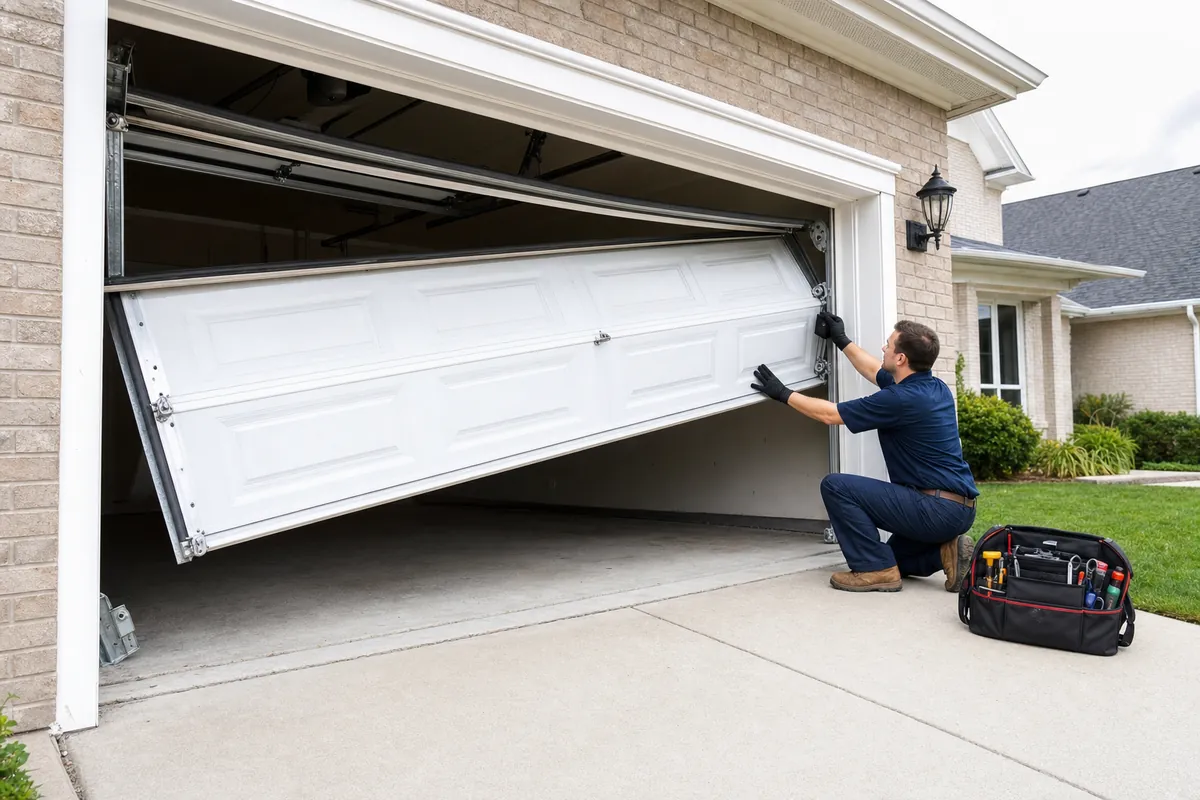
A sectional door pulled off its tracks, taken down and supported on site so it could be checked and re-hung safely — photographed on the job.
