Home All Services
All 10 Services
Emergency Garage Door RepairGarage Door Spring RepairGarage Door Spring ReplacementGarage Door Cable RepairGarage Door Roller & Track RepairGarage Door Opener RepairGarage Door Opener InstallationGarage Door Panel ReplacementNew Garage Door InstallationGarage Door Maintenance & Tune-Up All Service Areas
All 16 Neighbourhoods
Historic DowntownCentral NewmarketQuaker HillBristol-LondonGlenway EstatesCrossland GreenArmitageHuron HeightsLeslie ValleyGorham-College ManorSummerhill EstatesStonehaven-WyndhamCopper HillsWoodland HillBogartYonge & Davis Corridor
Troubleshooting Guides
Diagnose a Problem
Door won't closeLoud noiseBroken spring signsFrozen shutRemote not workingOff track About Book Service

Garage Door Roller & Track Repair Newmarket

Worn rollers, bent track and loose brackets corrected for quiet, guided travel.

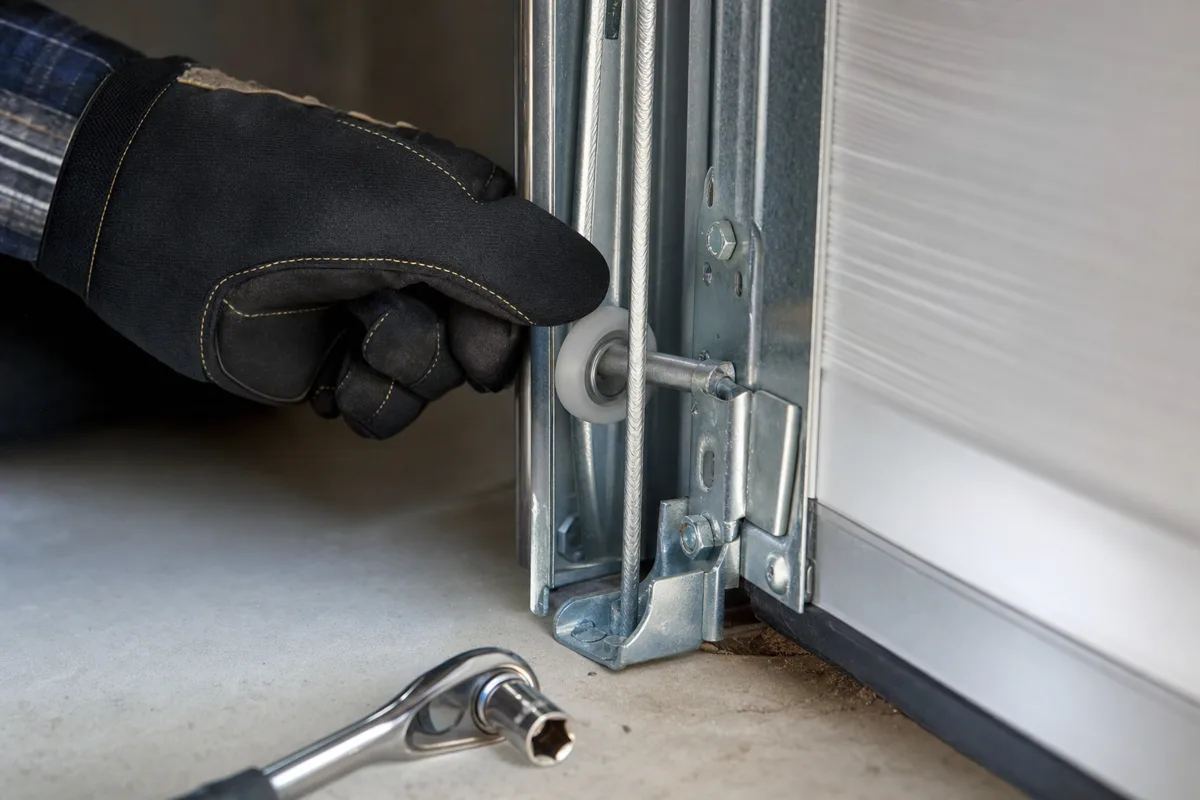
Vertical track, bottom roller bracket and lift cable at the base of a garage door, with the wall-mounted safety sensor beside the opening
What's involved

Garage Door Roller & Track Repair

Rollers and track are what keep a heavy panel travelling in a straight, predictable line. Rollers ride in the track on stems set into the hinges; the track guides them through the vertical run, around the radius and back along the horizontal. When a roller wears, seizes or loses its bearing, the door drags at that point. When track is bent, misaligned or fastened to loose brackets, the door binds, gets noisy, and eventually finds a way out of the guide path altogether. Most doors that come off track were telling somebody about it for months first.

  • Diagnosed before quotedWe identify the actual fault rather than replacing parts on assumption.
  • Confirmed by emailSubmit the form and we reply with your appointment window and details.
Symptoms

Signs You Need This Service

  • Grinding, rumbling or squealing that follows the door up and down.
  • The door judders or hesitates at the same point every time.
  • Visible gaps between a roller and the track wall.
  • Bent, creased or dented vertical track, often near the floor.
  • Track brackets visibly loose or pulled away from the framing.

Repair or replace?

Rollers are consumables and should be treated as such. Sealed nylon rollers on correctly sized stems run quieter, need less attention and outlast the unsealed builder items fitted to most new subdivision doors. Track, by contrast, should last the life of the door unless it is impacted or its brackets work loose, which is why a bent section is replaced rather than persuaded back into shape: a crease at a roller path is a permanent bind. Where the same section keeps getting hit, the useful conversation is about protecting the opening rather than replacing the track again.

Not sure this is your problem?

Work through the symptom first — some of these turn out to need no technician at all.

Root causes

What Actually Goes Wrong

Worn or seized rollers

Unsealed builder-grade rollers pick up grit and lose their bearings, then flatten on one side and skid rather than roll. The drag transfers into the hinges, the track and the opener.

Impact damage

A vehicle catching the vertical track leaves a crease at exactly the point a roller has to pass. The door often keeps working for a while, which is how a small dent becomes a derailment weeks later.

Loosened brackets

Years of vibration back the fasteners out of track brackets and flag angles. The track then shifts under load and the gap between roller and track changes through the travel.

Grit, salt and dry hinges

Winter brings sand, salt and slush into the track. Combined with hinges that have never been lubricated, it produces friction the whole assembly has to work against on every cycle.

Local conditions

Why This Matters in Newmarket

Track work here is largely a winter debris story. Newmarket averages 122.2 centimetres of snowfall a season across roughly 32 snowy days, and January alone brings about 31 centimetres, so sand, salt and slush are being carried into the lower track for months at a time. That grit is what destroys unsealed rollers. The other local factor is where the doors are: Armitage is 25 percent row housing and Summerhill Estates 34 percent, which puts a great many single-width garages directly beneath bedrooms. On those doors, roller quality is not a comfort upgrade, it is the difference between a door you can use early in the morning and one you cannot.

Safety

What to Handle Yourself

Never put fingers between the door sections or near a roller while the door is moving; section joints close with real force. Do not attempt to lever a roller back into the track on a door that is part way open, because releasing it can let the door drop or twist. Do not remove the bottom roller bracket, which is under spring tension through the cable. Cleaning grit out of the lower track with a cloth and lubricating hinges are reasonable homeowner tasks. Straightening track, replacing rollers on a loaded door, or re-railing a derailed door are not.

The visit

How We Work Through It

  1. Watch it move

    The door is run by hand with the opener disconnected so the exact point of binding, the sound and the roller behaviour can be observed rather than inferred from a description.

  2. Check alignment and fixings

    Vertical track is checked for plumb and for consistent spacing from the door, horizontal track for level and support, and every bracket and flag angle for whether it is fixed into solid framing.

  3. Replace and true up

    Worn rollers are replaced with correctly sized stems, damaged track sections are replaced rather than hammered straight, and alignment is set so the roller gap stays even through the full travel.

  4. Lubricate and retest

    Hinges, rollers and bearings are lubricated appropriately, the door is cycled by hand and then under power, and opener force settings are reviewed now that the door moves with less resistance.

Related services

You Might Also Need

Lift cable and cable drum at the top corner of a garage door, the cable unwound from its drum and hanging slack down to the bottom bracket

Garage Door Cable Repair

Frayed, slack or unwound lift cables renewed so the door travels level again.

View details
Gloved hand steadying the curved track at the flag bracket during a maintenance visit

Garage Door Maintenance & Tune-Up

A pre-winter inspection and adjustment that catches wear before a January morning does.

View details
Sectional garage door dropped off its tracks and leaning inward, held on a stepladder during a night call-out, with the driveway lit beyond the opening

Emergency Garage Door Repair

Fast help for doors stuck open in the cold, jammed shut, or hanging out of square.

View details
Questions

Garage Door Roller & Track Repair FAQs

My door is suddenly very loud. Is that the opener?
Usually not. Most new noise on an older door comes from the rollers, the hinges or loose track brackets, and the opener is simply the thing amplifying it into the house. Steel or unsealed nylon rollers that have lost their bearings make a rumble that rises and falls with the door; dry hinges squeal at the section joints; loose brackets produce a rattle at a particular point in the travel. We identify which of those is making the sound before replacing anything, because lubricating everything and hoping is not a diagnosis.
Can a bent track be straightened instead of replaced?
A very slight bow in the vertical track can sometimes be corrected and realigned. A crease, a kink, or damage where the door has come off at speed is different: the roller has to pass that exact point on every cycle, and a deformed running surface will keep binding no matter how it is dressed. In those cases the section is replaced. It is not an expensive part, and reusing damaged track is how the same call-out happens twice.
Are nylon rollers actually better than steel?
For a residential door under a bedroom, generally yes. Sealed nylon rollers run markedly quieter, need less lubrication and transmit less vibration into the framing. Steel rollers are more tolerant of heavy commercial duty and heat, which is rarely the deciding factor on a house. What matters as much as the material is the stem length and the bearing quality, since a cheap sealed roller is still a cheap roller. We fit rollers sized to the track and the door rather than by category.
What actually makes a door come off its track?
Almost always something that was already wrong: a seized roller, a bent or misaligned track section, loose brackets, a snapped or unwound cable, or an obstruction that stops one side while the other keeps moving. Impacts accelerate all of it. The reason a derailment feels sudden is that the door was tolerating a growing fault until one cycle exceeded what the guide path could hold. Judder, noise and hesitation at a consistent point are the warnings that precede it.

Book Garage Door Roller & Track Repair

Fill out the form and we'll confirm your appointment by email.

We confirm every request by email, usually the same day it arrives.

  • Proudly Canadian
  • Same-day service available
  • 16 Newmarket communities
  • Every request confirmed by email
Request received. We'll email you a confirmed time window shortly.
Service area

Where We Work

Garage Door Roller & Track Repair is available across every Newmarket neighbourhood inside the area below.

Map data © Google. Pin shows the service area, not a walk-in location — all work is done at your home.

Sectional garage door dropped off its tracks and leaning inward, held on a stepladder during a night call-out, with the driveway lit beyond the opening
From the tools

A real callout, not stock imagery.

A sectional door pulled off its tracks, taken down and supported on site so it could be checked and re-hung safely — photographed on the job.