
Garage Door Opener Repair
Boards, limits, drive parts and safety sensors diagnosed before anything is swapped.
View detailsOperators matched to the door weight and the ceiling you actually have.

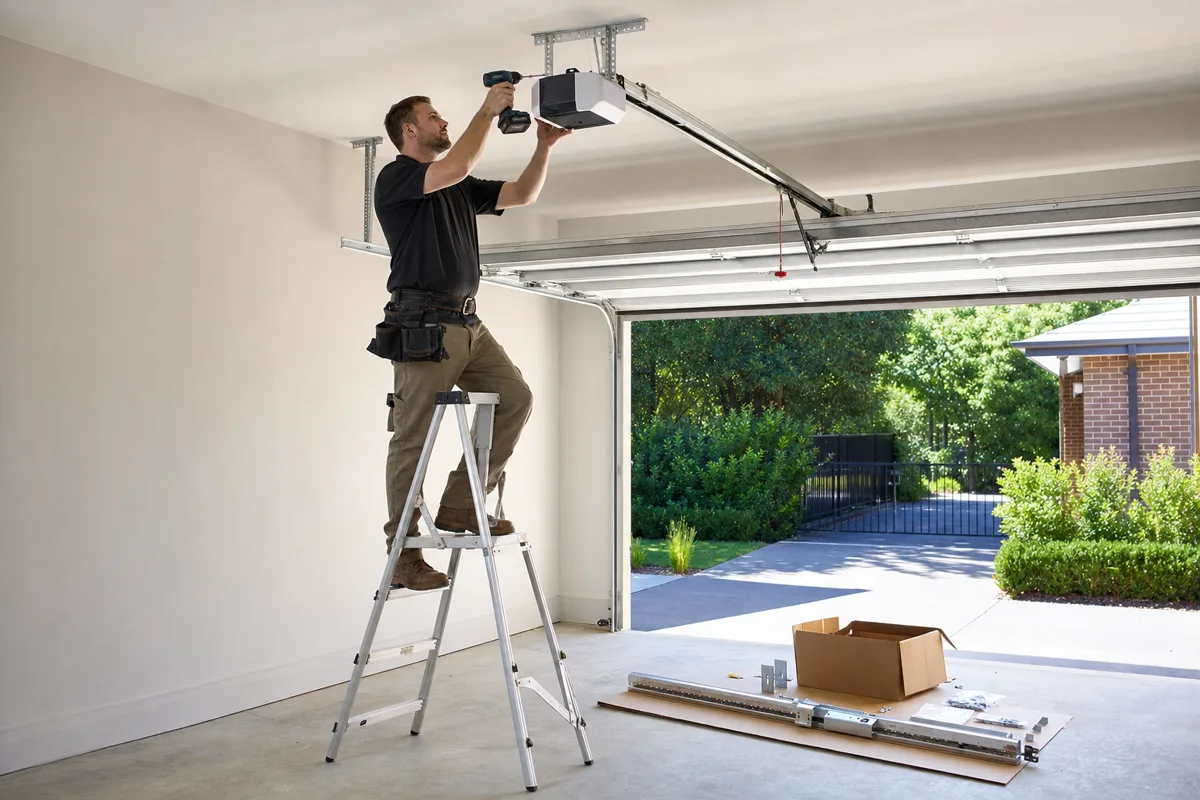
Installing an opener is mostly a question of matching the drive to the door and to the space above it. Belt drives are the quiet choice for a garage under a bedroom; chain drives are robust and cheaper; wall-mounted jackshaft units drive the torsion shaft instead of the door and are the answer where there is almost no headroom or where the ceiling is needed for storage. Horsepower has to suit the door's weight and width, not the largest number on the shelf. Getting those choices right at the start is what determines how the door sounds and behaves for the next decade.
A correctly sized opener on a properly balanced door does very little work, which is the whole reason it lasts. The variables that shorten opener life are almost all outside the unit: weak springs, dragging rollers, a bent track, or force settings raised to overcome resistance instead of removing it. Belt drives generally stay quieter for longer than chains in a residential setting; jackshaft units keep the ceiling clear and avoid the headroom question entirely. Whichever is fitted, the annual jobs are the same: test the reverse, check the sensors, and keep the door itself balanced.
Work through the symptom first — some of these turn out to need no technician at all.
An older chain drive bolted to joists under a bedroom transmits vibration through the structure. A belt drive on isolated hardware, with sealed rollers on the door, addresses the actual path of the noise.
Century houses and converted rear garages often have very little space between the top of the open door and the ceiling. A jackshaft unit mounted beside the shaft removes the need for that clearance entirely.
A wide insulated double door needs more capacity than a single uninsulated door. Sizing the drive to the actual door prevents the straining and force-trip behaviour that shortens an opener's life.
Fixed-code remotes, no keypad and an unreliable reverse are all reasons households replace a working unit. Current drives bring rolling codes, app control and a tested safety circuit.
Newmarket has two installation situations that come up far more often than the suburban average. In the historic core and Lower Main Street South, garages are frequently detached, reached from a side drive or a back lane, and built with very little headroom, which is where a wall-mounted jackshaft unit earns its place; if the garage is a designated heritage property, a heritage permit is required for a new structure or a new facade, so confirm scope with the Town before planning changes. At the other end of town, Crossland Green's newer bungalow phases and Copper Hills' detached homes bring wide insulated doors that need the drive sized to the door rather than to habit.
New installations must have working photo eyes and a functioning safety reverse, tested against an obstruction on the floor rather than assumed. Wall control buttons belong out of reach of children, and the manual release cord should be identified to everyone in the house. Never mount the header bracket into trim or drywall alone, and never set force higher than the door needs to make a heavy door close. Fitting an opener means working around a torsion spring system under tension, which is a reason to leave the installation itself to someone equipped for it.
Balance, spring condition, rollers, hinges and track are checked before any opener is specified. A new drive fitted to an unbalanced door inherits the problem and fails early.
Headroom, backroom, ceiling structure, the position of the torsion shaft and the available power outlet all determine whether a rail-mounted or jackshaft unit is appropriate.
The header bracket and ceiling supports are fixed into framing rather than drywall or trim, the rail is set square to the door, and the door arm is attached at the correct height on a reinforced top section.
Travel limits and force are set to the door, photo eyes are aligned and the safety reverse tested against an obstruction, remotes and keypad are paired, and the household is shown the release cord and the reverse test.
Boards, limits, drive parts and safety sensors diagnosed before anything is swapped.
View details
Doors measured to the opening in front of us, heritage streets and narrow lots included.
View details
A pre-winter inspection and adjustment that catches wear before a January morning does.
View detailsFill out the form and we'll confirm your appointment by email.
Garage Door Opener Installation is available across every Newmarket neighbourhood inside the area below.
Map data © Google. Pin shows the service area, not a walk-in location — all work is done at your home.

A real callout, not stock imagery.
A sectional door pulled off its tracks, taken down and supported on site so it could be checked and re-hung safely — photographed on the job.