Home All Services
All 10 Services
Emergency Garage Door RepairGarage Door Spring RepairGarage Door Spring ReplacementGarage Door Cable RepairGarage Door Roller & Track RepairGarage Door Opener RepairGarage Door Opener InstallationGarage Door Panel ReplacementNew Garage Door InstallationGarage Door Maintenance & Tune-Up All Service Areas
All 16 Neighbourhoods
Historic DowntownCentral NewmarketQuaker HillBristol-LondonGlenway EstatesCrossland GreenArmitageHuron HeightsLeslie ValleyGorham-College ManorSummerhill EstatesStonehaven-WyndhamCopper HillsWoodland HillBogartYonge & Davis Corridor
Troubleshooting Guides
Diagnose a Problem
Door won't closeLoud noiseBroken spring signsFrozen shutRemote not workingOff track About Book Service

Garage Door Spring Replacement Newmarket

Broken or fatigued springs replaced as a matched pair and re-tensioned to the door.

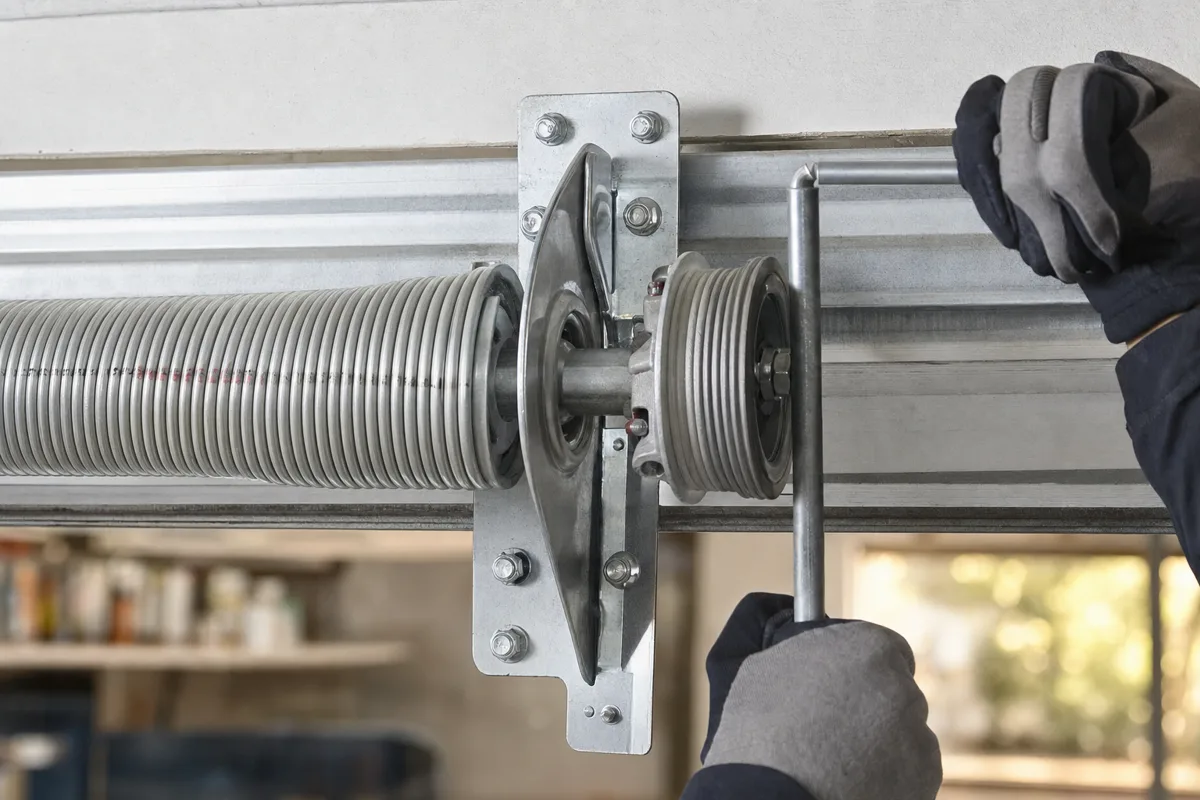
Torsion springs on the shaft above a residential garage door, with the centre bearing plate, both cable drums and the red emergency release cord in frame
What's involved

Garage Door Spring Replacement

When a spring has actually broken there is no repair path. The wire has fatigued and separated, usually with a bang loud enough to be mistaken for something hitting the house, and the door is now its full weight with nothing holding it. Replacement means new springs sized to the specific door rather than to what happened to be on the van: correct wire diameter, inside diameter, length and wind direction, fitted as a matched pair and wound to the tension that door needs. Doing that properly is what makes the difference between a door that lasts and a door that comes back.

  • Diagnosed before quotedWe identify the actual fault rather than replacing parts on assumption.
  • Confirmed by emailSubmit the form and we reply with your appointment window and details.
Symptoms

Signs You Need This Service

  • A loud bang from the garage, then a door that will not lift.
  • A visible gap of a few centimetres in one spring coil.
  • The opener runs, strains and stops without moving the door.
  • The door is far too heavy to lift by hand.
  • The door drops fast when released instead of staying put.

Repair or replace?

New springs restore the counterbalance to what the door actually needs, and matched pairs then age together rather than one carrying the other. Life expectancy depends on cycles, not calendar years, so a household that uses the garage as its main door should expect a shorter interval than one that uses it for a car twice a day. Higher-cycle springs are available where a door is used heavily and the geometry allows them, and that trade-off gets set out openly. What does not get done is replacing one spring of a pair to save a little now and unbalance the door for the rest of its life.

Not sure this is your problem?

Work through the symptom first — some of these turn out to need no technician at all.

Root causes

What Actually Goes Wrong

Cycle life reached

Springs are rated for a number of open-and-close cycles, and every cycle works the wire a little. Reaching that rating is the normal, expected end of a spring's service rather than a defect.

Undersized for the door

A spring wound for a lighter door works harder on every cycle and fails early. It happens most often when an uninsulated door was replaced with a heavier insulated one and the original springs were reused.

Corrosion in the coils

Rust pits the wire surface and each pit is a place a crack can start. Unheated garages with damp floors and salt carried in on vehicles are the usual setting for it.

Cold on a tired spring

Low temperatures do not break a sound spring, but they contract the steel and stiffen everything around it, which is why a spring near the end of its life so often gives up on the coldest morning of the year.

Local conditions

Why This Matters in Newmarket

Two Newmarket patterns drive most of the replacement work here. The first is cold: with a January mean around minus 7.4 degrees and a mean daily low near minus 11.1, a spring already at the end of its cycle life very often fails on a January morning rather than in July. The second is retrofit history. Bristol-London and the other 1970s and 80s suburbs are full of wide two-car doors, and where an original uninsulated door was swapped for a heavier insulated one without re-springing, the springs have been overloaded on every cycle since. Both cases end the same way, and both are worth catching at the balance-check stage instead.

Safety

What to Handle Yourself

This is the single most dangerous routine job on a residential garage door. A wound torsion spring stores enough energy to break bones, and the bottom brackets remain under full tension even when the door is open. Do not attempt to remove, install or wind springs, and do not remove a bottom bracket or a winding cone set screw. If a spring has broken with the door up, keep everyone clear and do not pull the release cord. If it broke with the door down, leave it down. Send the details through the form and let the door stay where it is.

The visit

How We Work Through It

  1. Identify the door, not the spring

    The door is weighed or calculated, the drum size and track radius noted, and the existing spring measured for wire, inside diameter and length. Springs are then specified to the door rather than matched to whatever was there.

  2. Release safely and strip out

    Remaining tension is let down under control with winding bars before anything is loosened. The failed spring, and its partner, come off with the shaft supported and the door secured.

  3. Fit as a matched pair

    Both springs are replaced together so the pair shares load and remaining life evenly. Bearings, the centre plate and the anchor backing are checked and replaced where worn while access is open.

  4. Wind, balance and test

    Springs are wound to the calculated tension, drums set with equal cable wraps, and the door tested by hand for hold and level travel before the opener is reconnected and its force settings reviewed.

Related services

You Might Also Need

Centre bearing bracket and the end of a torsion spring on a residential garage door, the shaft seated in its bearing and the bracket bolted back to the header

Garage Door Spring Repair

Tension and balance reset on intact springs so the door stops fighting the opener.

View details
Lift cable and cable drum at the top corner of a garage door, the cable unwound from its drum and hanging slack down to the bottom bracket

Garage Door Cable Repair

Frayed, slack or unwound lift cables renewed so the door travels level again.

View details
Sectional garage door dropped off its tracks and leaning inward, held on a stepladder during a night call-out, with the driveway lit beyond the opening

Emergency Garage Door Repair

Fast help for doors stuck open in the cold, jammed shut, or hanging out of square.

View details
Questions

Garage Door Spring Replacement FAQs

Can a broken spring be welded or rejoined?
No. The wire has fatigued along its length, not just at the point where it separated, and heat from welding would destroy what temper remains. Any repair attempt would put a household in front of a component holding enough energy to injure someone. Replacement is the only safe outcome, and it is a routine job when done with the right springs and the right tools. The useful conversation is about sizing and cycle rating, not about salvaging the broken wire.
Why replace both springs when only one broke?
Because they have done the same work. Both springs have been through the same number of cycles in the same conditions, so the intact one is close behind the failed one, and replacing a single spring means a second call-out and a second labour charge shortly afterward. Mismatched springs also share load unevenly, which leaves the door out of balance and pushes the imbalance onto the opener. Replacing the pair is the cheaper decision measured over any sensible period.
How long do garage door springs last?
They are rated in cycles rather than years, so the honest answer depends entirely on use. A door opened and closed twice a day will take many years to reach a rating that a family using the garage as its main entrance six or eight times a day will reach far sooner. Corrosion, mis-sizing and an unbalanced door all shorten it further. We can tell you the wire and length fitted and what its cycle rating implies for your pattern of use, which is more useful than a number of years.
Will new springs fix my opener problems too?
Frequently they improve them, because most so-called opener problems are load problems. When springs weaken, the motor carries weight it was never sized for, so it strains, overheats, trips its force setting or stops part way. Restoring proper counterbalance takes that load off. If the opener has a genuine electrical or mechanical fault, correcting the springs will not hide it, and we will say which of the two we are looking at rather than replacing both and calling it solved.

Book Garage Door Spring Replacement

Fill out the form and we'll confirm your appointment by email.

We confirm every request by email, usually the same day it arrives.

  • Proudly Canadian
  • Same-day service available
  • 16 Newmarket communities
  • Every request confirmed by email
Request received. We'll email you a confirmed time window shortly.
Service area

Where We Work

Garage Door Spring Replacement is available across every Newmarket neighbourhood inside the area below.

Map data © Google. Pin shows the service area, not a walk-in location — all work is done at your home.

Sectional garage door dropped off its tracks and leaning inward, held on a stepladder during a night call-out, with the driveway lit beyond the opening
From the tools

A real callout, not stock imagery.

A sectional door pulled off its tracks, taken down and supported on site so it could be checked and re-hung safely — photographed on the job.